 Cyber Threat Intelligence
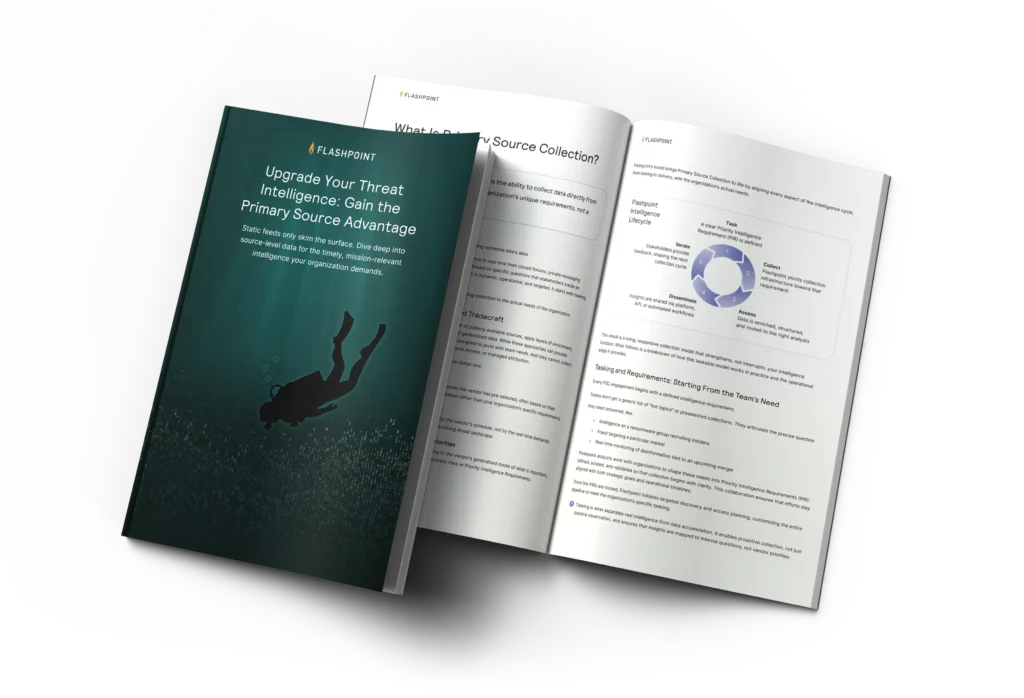
Gain the Threat Intelligence Advantage with Primary Source Collection
The Future of Threat Intelligence Collection: Beyond Static Feeds Move beyond passive, static threat feeds. …
Search for topics, resources and solutions
A practical, repeatable framework for prioritizing vulnerabilities based on real-world risk, exploitability, and business impact.
Organizations are gaining new ways to identify vulnerabilities at scale, thanks to new generations of powerful AI models. However, security teams still face the same fundamental question: which vulnerabilities actually matter?
Security teams have increasingly struggled to keep pace with growing disclosure volumes. So far in 2026, Flashpoint has tracked 21,667 vulnerabilities, an 8% year-over-year increase, while nearly one-fifth included publicly available exploit code. At the same time, the gap between disclosure and exploitation continues to shrink, with some vulnerabilities weaponized in as little as 24 hours.
Recent developments such as Anthropic’s Mythos model have highlighted the growing potential for AI-assisted vulnerability discovery. As advances in code analysis enable researchers and organizations to identify software flaws at unprecedented speed and scale, the volume of discovered vulnerabilities is set to increase significantly across software ecosystems.
While increased visibility into vulnerabilities is ultimately positive for defenders, it amplifies a challenge security teams already face: separating the vulnerabilities that pose meaningful risk from those that do not. Finding more vulnerabilities with AI does not automatically make organizations more secure — the key is understanding which vulnerabilities represent meaningful risk to your environment and require immediate action.
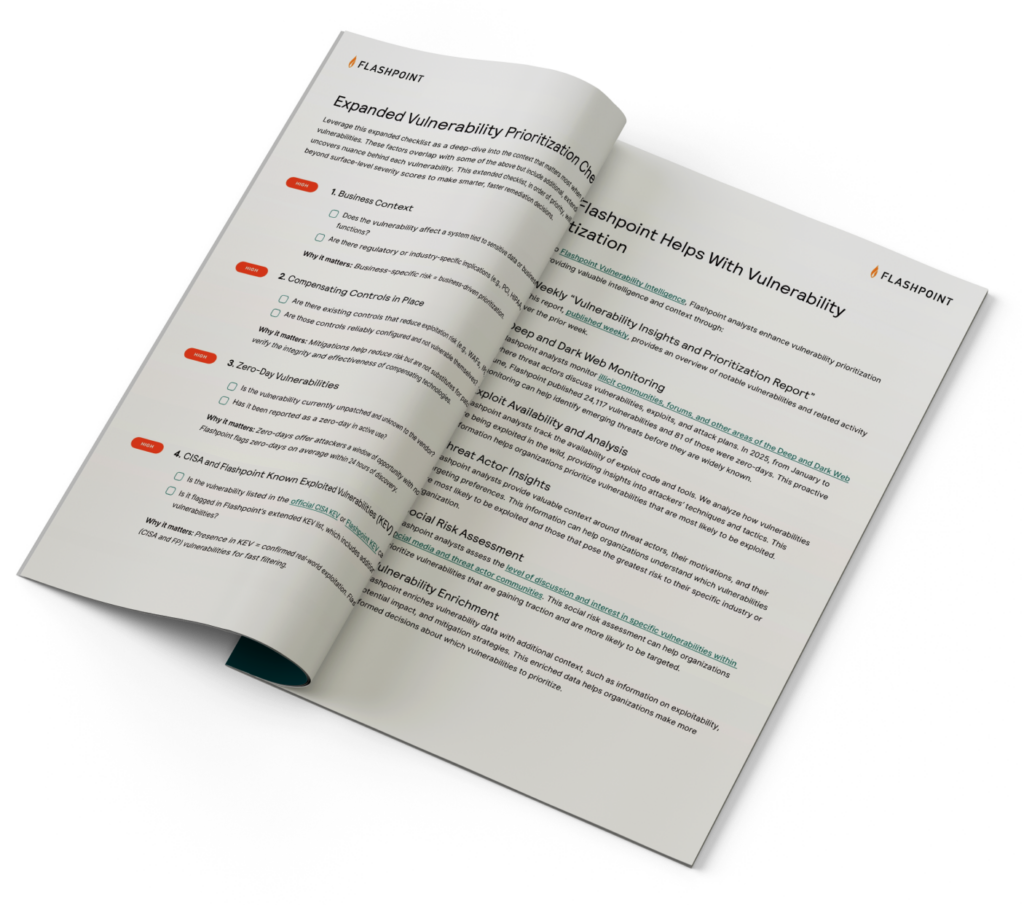
That’s why we created this guide — to introduce the Flashpoint Method for Threat-Informed Vulnerability Prioritization, a practical, intelligence-driven framework designed to help vulnerability and exposure management teams cut through the AI-driven noise and focus on the vulnerabilities that matter most. By incorporating real-world exploitation activity, threat actor behavior, asset exposure, business context, and remediation considerations, organizations can make faster, more informed decisions and reduce risk more effectively.
To download your e-book, please fill out the form on your right!
Cyber Threat Intelligence
The Future of Threat Intelligence Collection: Beyond Static Feeds Move beyond passive, static threat feeds. …

Data, insights, and key takeaways on the most impactful threats of 2025—from infostealers and ransomware to …

From AI-powered threats to ransomware evolution, here’s what’s reshaping the threat landscape and what your …